Commercial building washing in Brisbane: how often, when and what to ask before you book
Why commercial exteriors need a plan, not a one-off clean
Customers and tenants judge a commercial building before they walk through the door. Algae on the render, dark streaks under the awnings, chewing gum at the entry and oil in the loading bay all say something about how the site is looked after. Brisbane's heat, summer storms and humidity speed all of that up, and busy entries and food precincts get dirty far faster than a quiet office frontage.
A commercial clean also has to fit around trading hours, site rules and safety requirements, which a house wash rarely does. That is why most facilities and property managers plan exterior cleaning as a schedule, rather than calling someone in once the building already looks tired.
What a commercial exterior clean covers
Each surface gets the method that suits it:
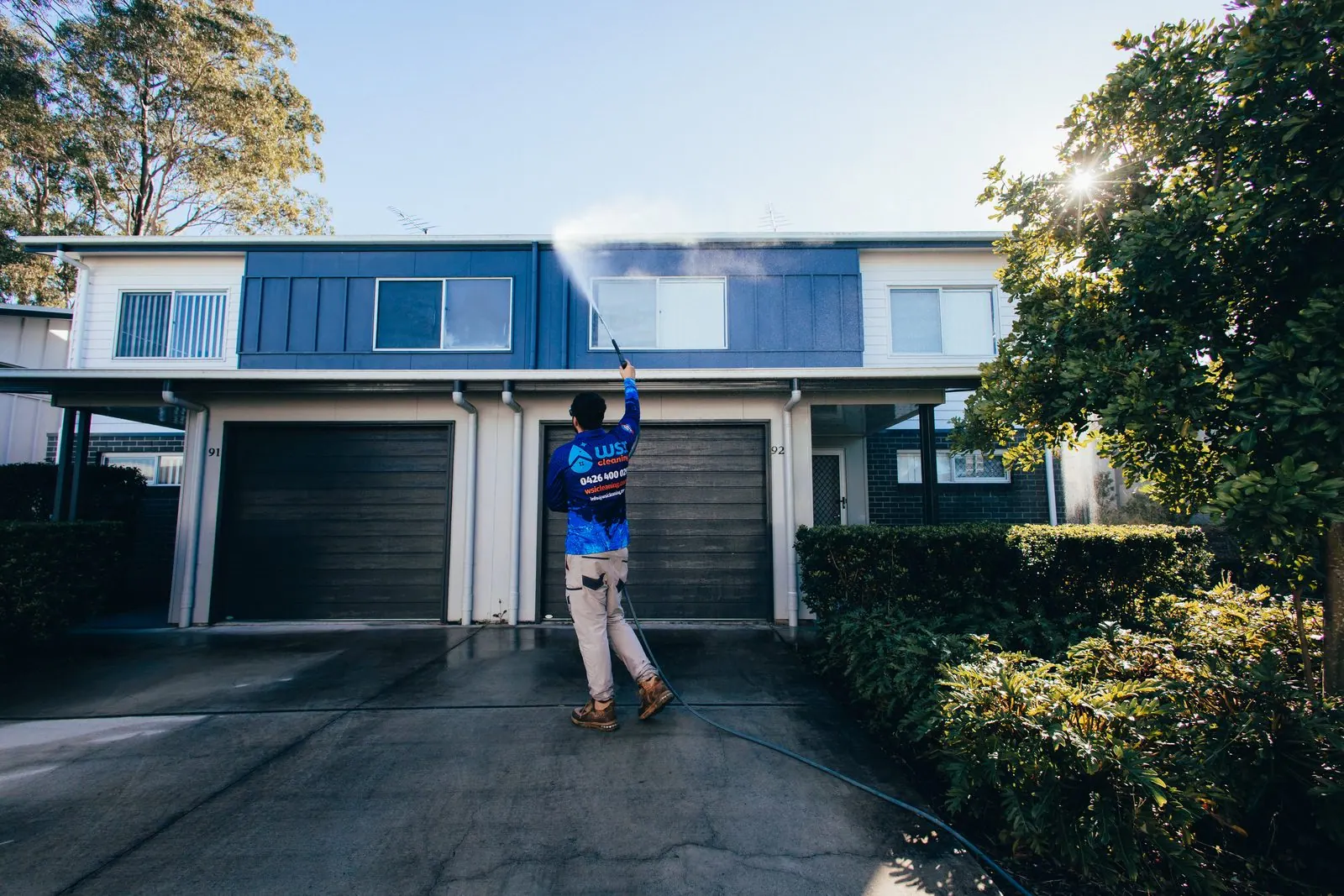
- Painted facades, render and cladding: a low-pressure soft wash to lift algae and pollution staining without etching the finish.
- Glass facades and entries: a purified-water pole system for spot-free glass, often booked together with window cleaning.
- Paving, breezeways, walkways and loading bays: pressure washing, with a degreaser pre-treatment where oil is present.
- Signage and awnings: a soft wash with a detergent that will not fade vinyl or printed graphics.
- Hospitality back-of-house: a pressure wash with a degreaser-led pre-treatment for grease and food spills on ground surfaces.
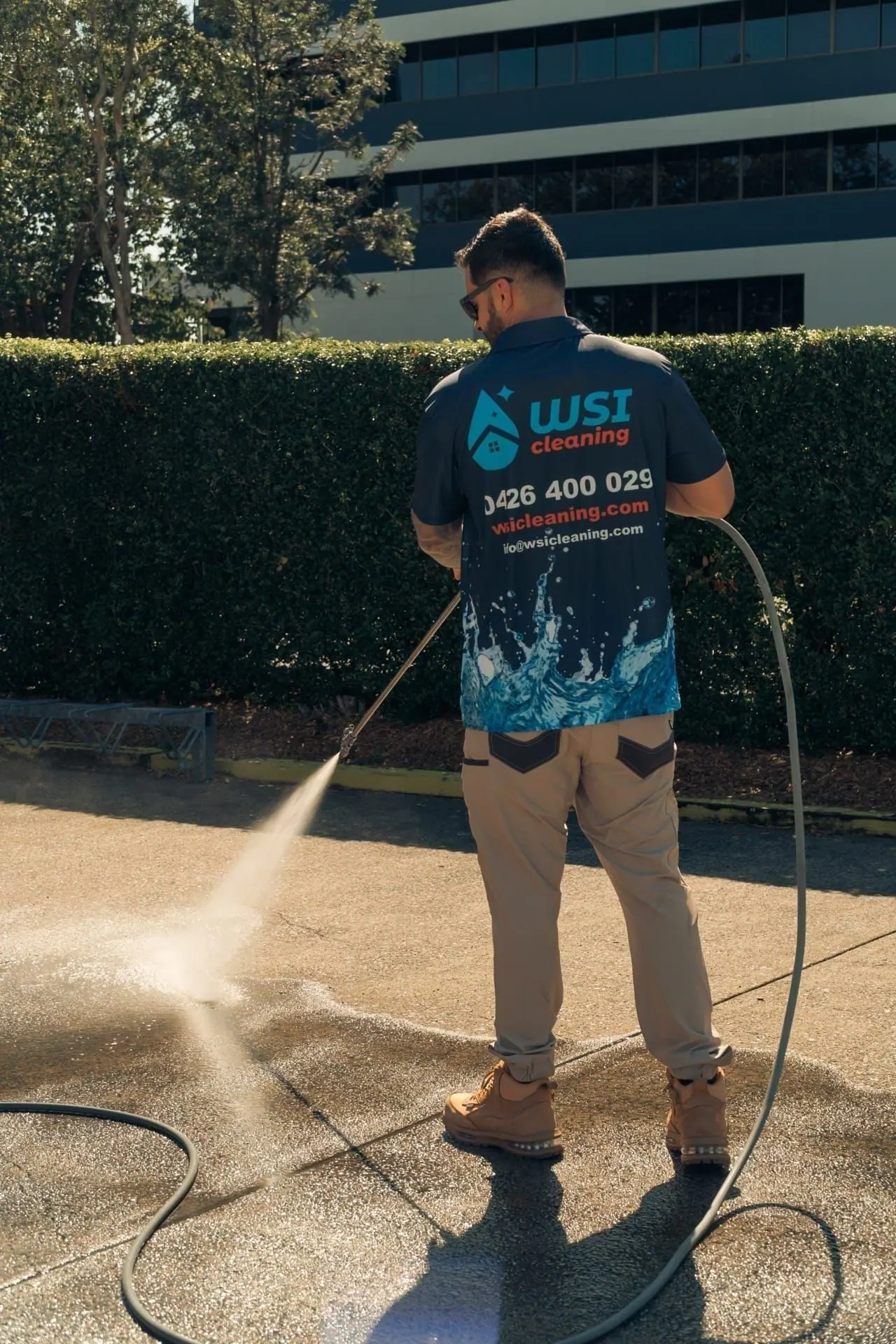
Our soft wash vs pressure wash guide explains why high pressure on render, paint or cladding causes damage that costs far more to fix than the clean itself.
How often should a commercial building be washed?
It depends on foot traffic, exposure and how the building is used. As a starting point, most commercial sites WSI Cleaning looks after settle into one of these cycles:
- High-foot-traffic shopfronts, cafes and retail entries: fortnightly.
- Offices and professional suites: quarterly.
- Industrial sites and warehouses: twice a year.
- Strata and body corporate buildings: at least once a year, and every six months on exposed coastal sites. That is the wash cycle Dulux recommends for its Acratex facade coatings, at low pressure, so many bodies corporate build it into the maintenance plan.
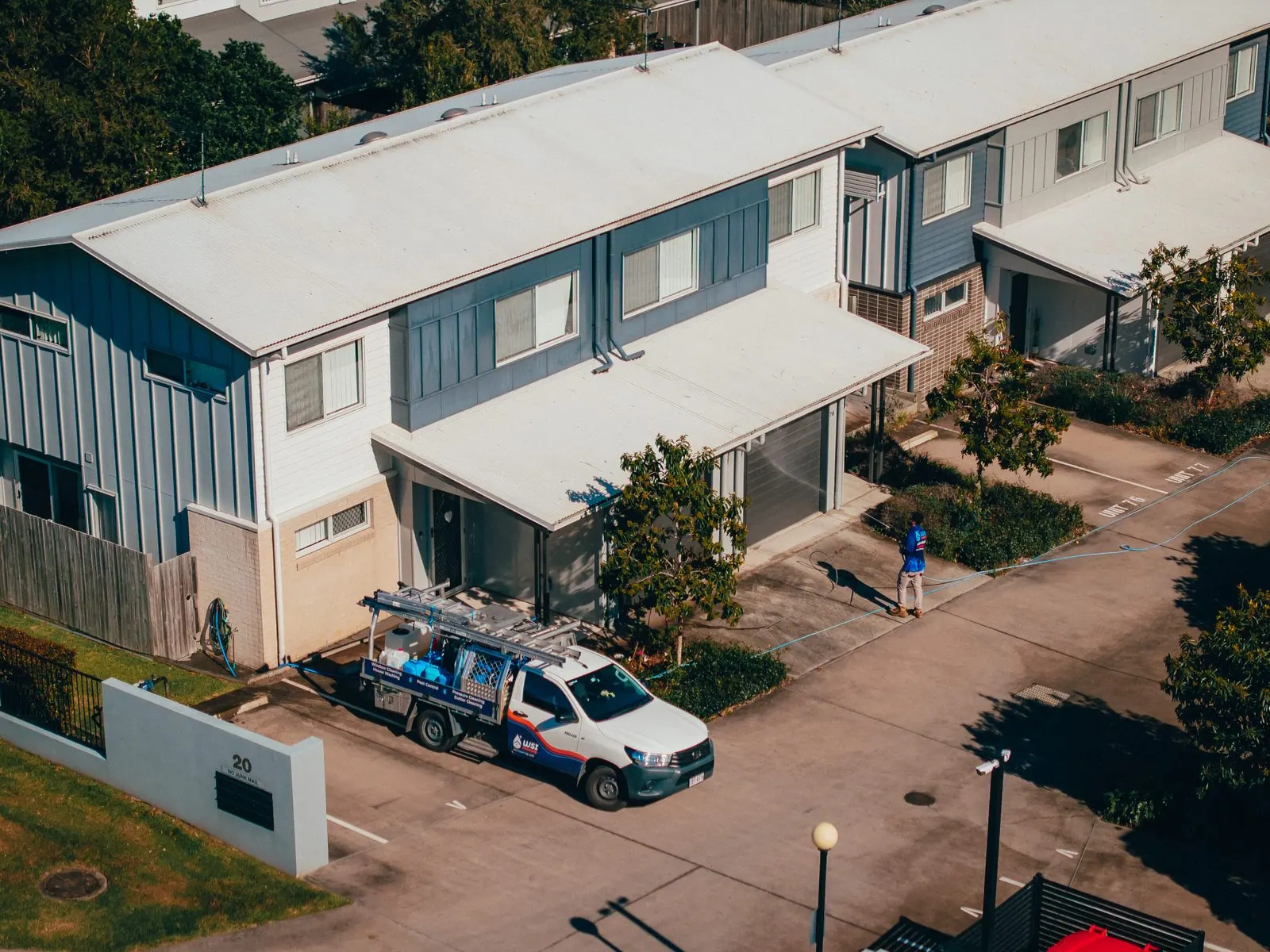
Add an extra clean before an opening, an inspection, a tenant handover or a major event, and after storms that leave mud and debris across paths and car parks.
Cleaning without disrupting trade
Most commercial cleans run before opening or after close. The most common window is 4am to 7am, so the site is dry and presentation-ready when the doors open. Retail, hospitality and 24-hour industrial sites can also be cleaned after hours.
Before the first visit, agree the scope, the access points, where the crew can park and set up, and how pedestrians will be kept clear of wet areas and hoses. A clear brief up front is what stops a 9am complaint.
Compliance: what to ask for before the first clean
If a contractor is not set up properly, the risk lands on the site. Before any work starts, ask for:
- A certificate of currency for public liability insurance. WSI Cleaning carries $20M public liability cover.
- A safe work method statement (SWMS) for the job, especially where work at height is involved.
- Contractor induction on your site's platform. WSI Cleaning is set up on Cm3, Rapid Global and Avetta, and will register on another system before the first attendance if your site uses one.
- The access method for anything above ground level, such as an elevating work platform (EWP), a scaffold or rope access.
WorkSafe Queensland's guidance on work at heights says the most effective control is to avoid working at height where it is reasonably practicable and, where it is not, to use proper fall prevention, for example working inside the edge-protected platform of an EWP. WSI Cleaning reaches up to three storeys with an EWP from its standard fleet and quotes hired access, such as a boom lift or rope access, for taller buildings.
What happens to the wash water?
Wash water from a commercial site can carry detergent, oil, grease, food waste and grit, and Brisbane's stormwater drains flow to creeks and the river. Under the City of Brisbane Act 2010, a person must not put trade waste or prohibited substances, which include grease and oil, into a stormwater drain, and the maximum penalties are significant.
State law goes further. Queensland's Environmental Protection Regulation 2019 lists waste water from outdoor cleaning, including high-pressure water blasting of commercial premises, as a prescribed water contaminant, and under the Environmental Protection Act 1994 it must not be released into a roadside gutter, stormwater drain or waterway.
Before you approve a quote, ask the contractor how they will handle it. A good answer covers drain covers or sandbags over the stormwater pits, a bund around the wash area, recovery of the wash water by vacuum or pump, and where the recovered water goes: to a licensed waste contractor, or to sewer only with a trade waste approval from Urban Utilities.
How a WSI Cleaning commercial job runs
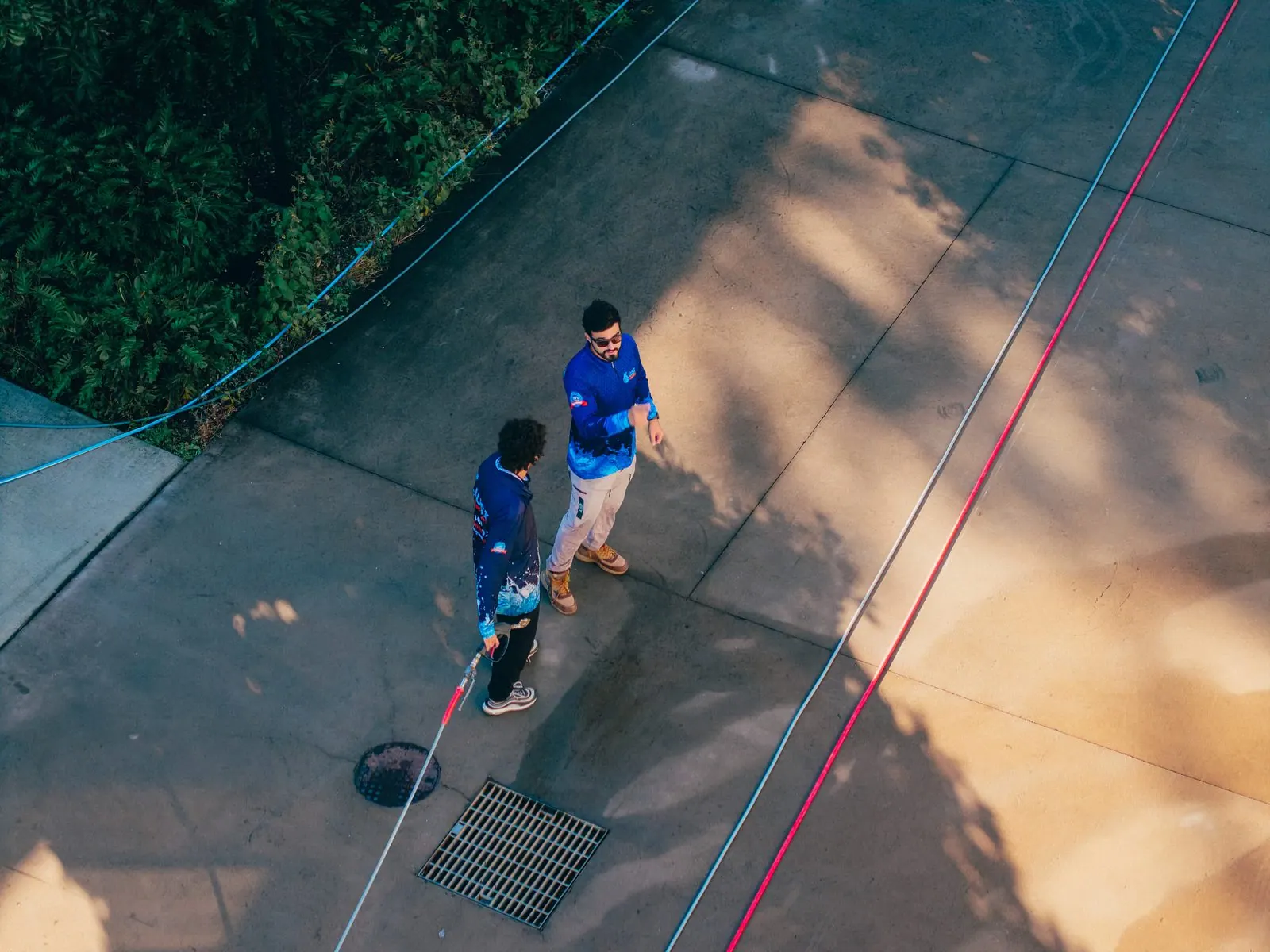
- Site survey: we walk the site with the operations or facilities manager and agree access, scope, hours and compliance requirements.
- Compliance pack: certificate of currency, SWMS and contractor induction, issued before the first attendance.
- Out-of-hours execution: the crew completes the scope inside the agreed window and leaves the site presentation-ready.
- Sign-off: a photo report the same day, so facilities can check the work without a return visit.
- Recurring schedule: a cycle set to the site's foot traffic and exposure.
For one-off issues, same-week attendance is standard for non-urgent commercial work, and storm response, vandalism clean-up and pre-event presentation cleans are quoted and crewed within 24 hours.
Getting an accurate quote
To quote a commercial building wash properly, a contractor needs the address, the surfaces in scope, the building height, the access available, your trading hours and any site rules or induction requirements. Photos of the worst areas help. WSI Cleaning quotes a fixed price, so the number on the quote is the number you pay. If you want a recurring schedule, ask for the price per visit and the scope of each visit to be written into the agreement, so every attendance is quoted on the same basis.
Planning exterior cleaning for an office, shopfront, warehouse or strata site in Greater Brisbane? Call WSI Cleaning on 0451 371 212 (Mon–Sun, 7am–7pm) or request a fixed-price quote with the address, the surfaces you need cleaned and your trading hours.
FAQ
How often should a commercial building be washed in Brisbane?
It depends on foot traffic and exposure. As a guide, busy shopfronts are usually cleaned fortnightly, offices quarterly and industrial sites twice a year, with extra cleans before events or after storms.
Can commercial cleaning be done outside trading hours?
Yes. Most commercial cleans run before opening, usually between 4am and 7am, or after close, so the site is ready when trade starts.
Is pressure washing safe for render and painted facades?
High pressure can etch render and lift paint. Facades, render, cladding and signage are best soft washed at low pressure, while paving and loading bays are pressure washed.
What documents should a commercial cleaner provide?
Ask for a certificate of currency for public liability, a safe work method statement (SWMS), induction on your site's contractor platform and the planned access method for any work at height.
Can wash water go into the stormwater drain?
No. Waste water from outdoor commercial cleaning is a prescribed water contaminant under Queensland's Environmental Protection Regulation 2019, and putting grease or oil into a stormwater drain is also an offence under the City of Brisbane Act 2010. Ask your contractor how they will cover the drains, recover the water and dispose of it.
How high can WSI Cleaning reach?
Up to three storeys with an EWP from the standard fleet. Taller buildings are quoted with hired access such as a boom lift or rope access.
More guides for South East Queensland properties.
A fixed price, no hidden fees.
Quick and simple. No pushy follow-ups, no hidden fees, no phone call unless you ask for one.