Pressure Washing
Professional pressure washing for driveways, paths, patios, pool surrounds and hard exterior surfaces where dirt, oil and organic growth have built up.
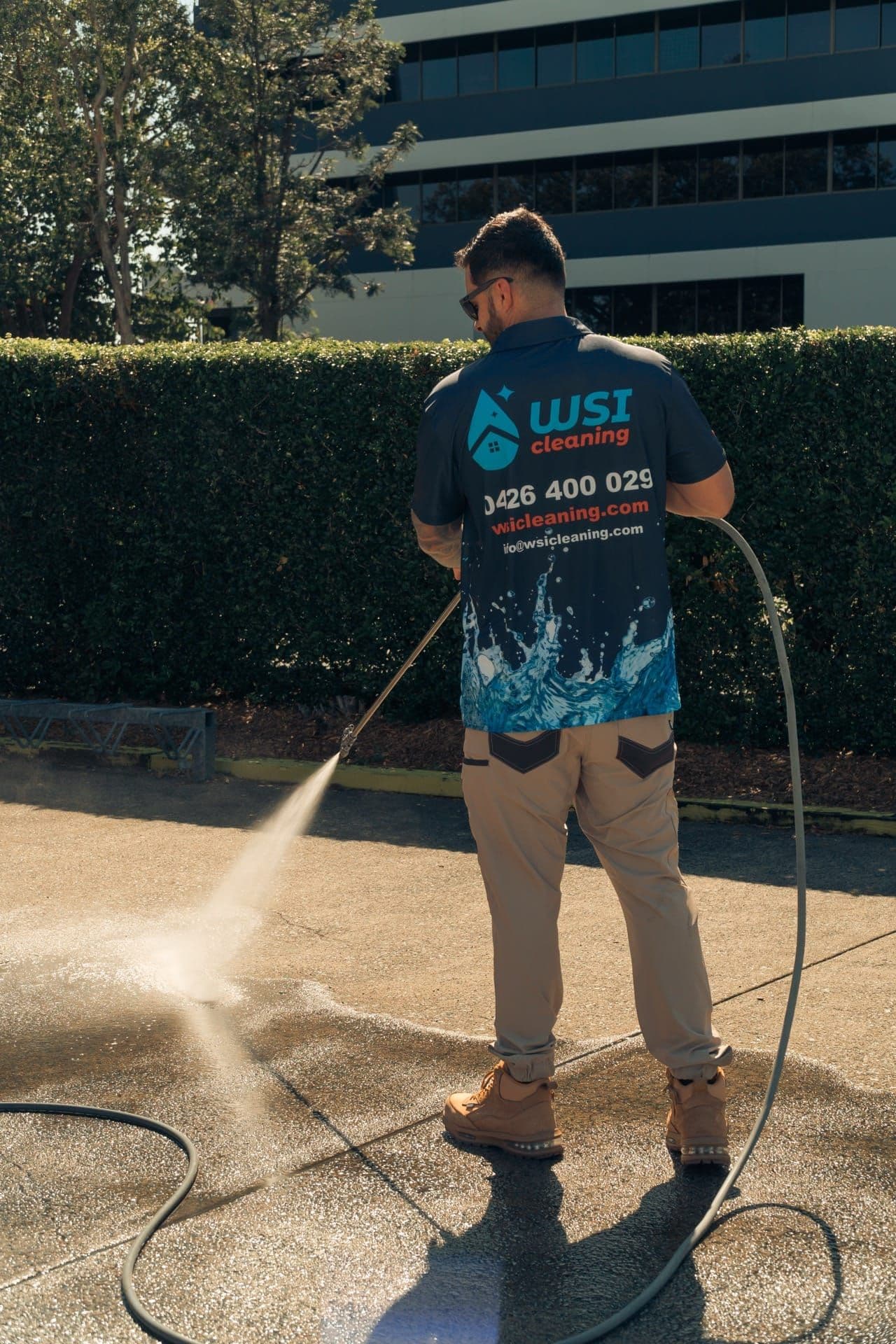
Pressure washing is the high-pressure cleaning of hard exterior surfaces — concrete, pavers, exposed aggregate, brick paths, retaining walls and pool surrounds — to remove ground-in dirt, oil, tyre marks, algae and rubber. WSI Cleaning runs commercial-grade pressure washers (3,000–4,000 PSI) with rotary surface cleaners for even results across Brisbane and the Sunshine Coast. We pressure-wash anything you walk or drive on; for walls, roofs and painted surfaces we use soft washing instead. Quotes are fixed in writing inside 24 business hours.
Right match for your property.
For properties with concrete, pavers or outdoor areas that need a strong, even clean.
Built on 12 years of surface care.
Right pressure for each surface, commercial-grade equipment, tidy finish.
Soft wash vs pressure wash — which does my property need?
Render, paint, weatherboard, fibre cement and roof tiles need soft washing (under 500 PSI) so the surface isn't stripped or pierced. Concrete driveways, paver paths, pool surrounds, retaining walls and unsealed brick can take pressure washing (1,500–4,000 PSI) safely. As a rule of thumb: anything you would repaint needs soft wash; anything you walk or drive on can be pressure washed. WSI quotes both methods in the same site visit, so the right surface gets the right treatment.
How we approach a pressure washing job.
- 01
Surface assessment
We identify the substrate (broom-finish concrete, exposed aggregate, sandstone, pavers, brick) and check for cracks, lifting joints or sealing that affects pressure choice.
- 02
Pre-rinse and degreasing
Loose debris is blown off. Oil stains are pre-treated with a degreaser and dwelled for 5–10 minutes.
- 03
Surface cleaner pass
A rotary surface cleaner is run in overlapping passes for even pressure across the whole area — no zebra striping, no missed strips.
- 04
Edge and detail work
Edges, expansion joints, around drains and against walls are detailed with a wand for a consistent finish.
- 05
Final rinse and inspection
Run-off is rinsed clear of the area, then we walk the surface with you before leaving.
What this service covers.
Concrete driveways
Surface cleaner at 3,000–4,000 PSI. Restores broom and trowel finish.
Exposed aggregate
Lower pressure (2,000–2,500 PSI) to avoid loosening stones; chemical pre-treat for moss.
Pavers & cobblestone
Pressure plus optional re-sanding of joints after cleaning.
Pool surrounds
Detergent-led clean to lift sunscreen and body oils without acid-etching.
Pressure Washing questions, answered.
Will pressure washing damage my concrete?
Not when it's done correctly. Standard broom-finish concrete handles 3,000–4,000 PSI. Exposed aggregate, sandstone and weak or aged concrete need lower pressure (2,000–2,500 PSI) and a wider tip to avoid pitting or stone loss.
Can you remove oil stains?
Most fresh and intermediate-age oil stains lift with a degreaser pre-treat and pressure pass. Deep, decade-old oil that has soaked into porous concrete may not come out fully — we'll tell you on the quote whether to expect a 90% lift or a complete clean.
Do you re-sand pavers after cleaning?
Yes, on request. Re-sanding stabilises the joints and stops weeds returning quickly. Specify on the quote if you want it included.
Should I seal the concrete after washing?
Sealing isn't required, but it slows re-soiling and helps oil and rust resist staining. We can recommend a sealer or refer a coatings specialist for the application.
How much water does a pressure wash use?
Roughly 200–400 litres per hour at residential PSI. We work from your outdoor tap; for properties on tank water we can bring our own supply on request.
A fixed price, no hidden fees.
Quick and simple. No pushy follow-ups, no hidden fees, no phone call unless you ask for one.